
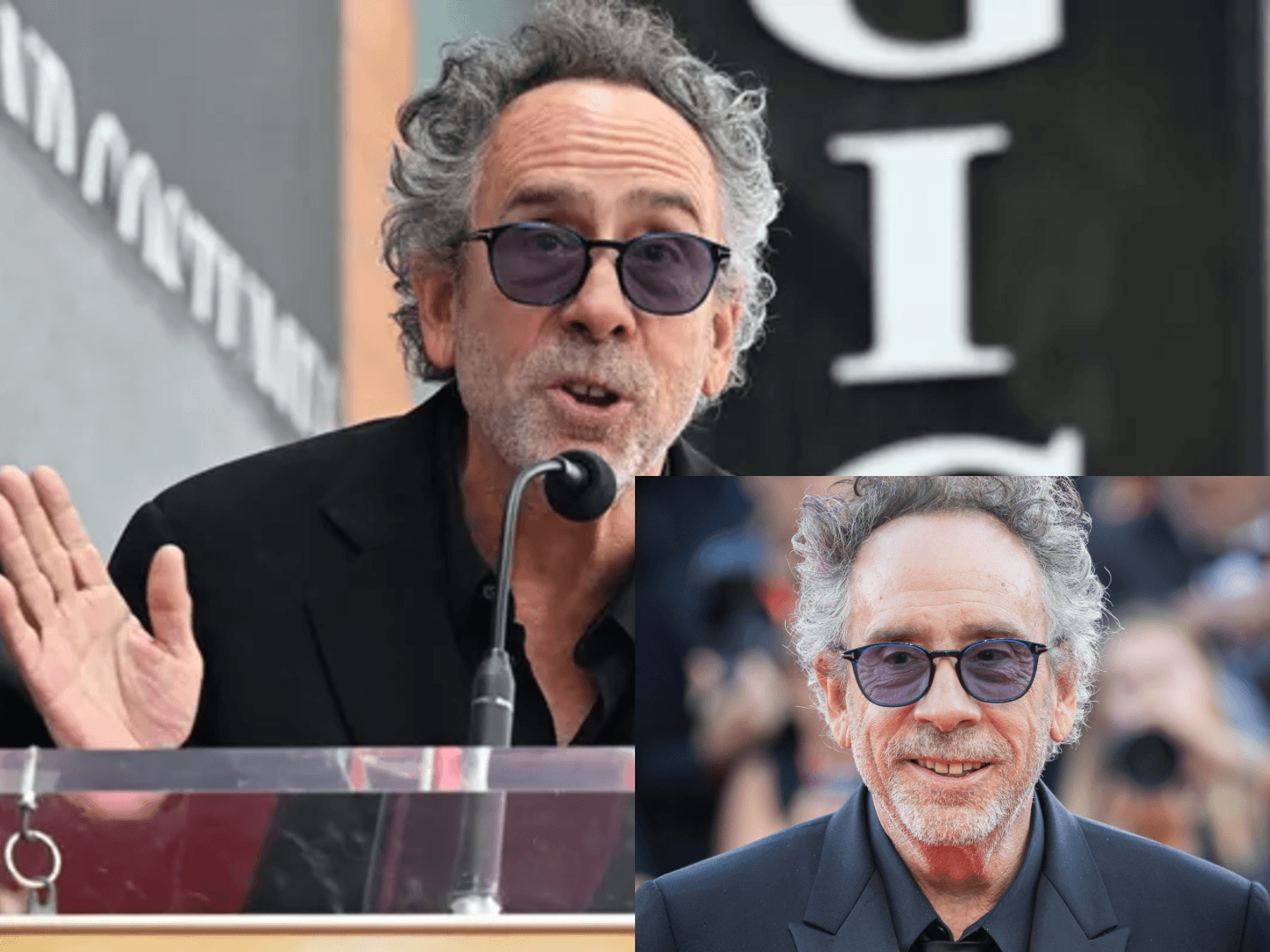
Tim Burton movies have captivated audiences for nearly four decades with their distinctive blend of gothic horror, dark fantasy, and heartfelt emotion. Born on August 25, 1958, in Burbank, California, Burton has become one of Hollywood’s most visually inventive directors, with a career spanning over 20 feature films and numerous acclaimed projects . His unique style, often described as “Burtonesque,” has earned him a devoted following and critical recognition worldwide.
The director’s journey began not in live-action filmmaking but within the walls of the Walt Disney Studios. After graduating from the California Institute of the Arts, where he was one of the earliest students of the Character Animation Program, Burton was recruited by Disney as an animator . He worked tediously on films like The Fox and the Hound before being made a conceptual artist, though he found mainstream Disney work far removed from his own darkly imaginative sensibility . Disney granted him the freedom to pursue personal projects, resulting in his first short film, Vincent, a six-minute black-and-white stop motion piece based on a poem Burton wrote and narrated by his hero, Vincent Price . His second short, the live-action Frankenweenie, was judged unsuitable for children and not released until 1992 . These early works established the macabre yet endearing tone that would define his entire career.
Paul Reubens, known as Pee-wee Herman, saw Frankenweenie and chose the young Burton to direct his feature debut, Pee-wee’s Big Adventure, in 1985 . The film was an enormous surprise box-office hit and introduced Burton to composer Danny Elfman, who would go on to score nearly all of his subsequent films . With the supernatural comedy Beetlejuice in 1988, Burton established himself as an unconventional filmmaker, pulling in an impressive eighty million dollars on a low budget and winning an Oscar for Best Makeup design . The film starred Michael Keaton, Alec Baldwin, Geena Davis, and Winona Ryder in a wildly inventive story about a recently deceased couple and the titular “bio-exorcist.”
The success of both projects led Warner Brothers to choose Burton for the big-budget Batman in 1989, a film the studio had been developing for ten years . It became one of the most successful films of all time, setting an opening weekend box office record of fifty million dollars and going on to gross four hundred million dollars worldwide . Burton followed with Batman Returns in 1992, a far darker and quirkier sequel that reflected his increased creative freedom, though Warner Brothers was reportedly unhappy with the final result . Burton himself has cited it as the film he feels most detached from among all his projects .
Edward Scissorhands, released in 1990, marked Burton’s first collaboration with Johnny Depp and remains arguably his most beloved film . The suburban fable about a youth with scissors instead of hands became a defining work for both director and star, forging a cinematic partnership that would produce eight films together. Burton wrote, produced, and directed this personal project, which introduced the quintessential “Burtonesque” themes of the misunderstood outsider and the contrast between dark fantasy and suburban conformity . During this period, Burton also served as producer and guiding creative force behind The Nightmare Before Christmas in 1993, a stop-motion animated film directed by Henry Selick . Based on a poem Burton wrote, the film boasted his trademark visual and thematic concerns, including expressionist lighting, stylized production design, and a lively score by Danny Elfman. It remains the film closest to Burton’s heart, as he had been wanting to make it for over a decade .
In 1994, Burton directed Ed Wood, a black-and-white biopic about the famously inept filmmaker starring Johnny Depp, with Martin Landau delivering an Oscar-winning performance as Bela Lugosi . Though a box office disaster, it garnered some of the best reviews of Burton’s career and won two Academy Awards . Burton followed with Mars Attacks! in 1996, inspired by the alien invasion movies of the 1950s and 1960s, though it too failed commercially despite starring an A-list ensemble cast . He returned to critical favor with Sleepy Hollow in 1999, an adaptation of Washington Irving’s story starring Depp and Christina Ricci, which earned three Oscar nominations for Costume Design, Art Direction, and Cinematography .
The new millennium brought both commercial successes and critical challenges. Burton’s remake of Planet of the Apes in 2001 was a box office hit, earning over one hundred eighty million dollars domestically, and during its filming he began a romantic relationship with one of its stars, Helena Bonham Carter, who would become his longtime partner and frequent collaborator . Big Fish in 2003 marked a more emotionally grounded fantasy drama that earned widespread acclaim . Burton then directed Charlie and the Chocolate Factory in 2005, an adaptation of Roald Dahl’s children’s book starring Depp, and simultaneously released Corpse Bride, a stop-motion musical featuring voice work by Depp and Bonham Carter that received an Academy Award nomination for Best Animated Feature .
Burton and Bonham Carter reteamed with Depp on Sweeney Todd: The Demon Barber of Fleet Street in 2007, based on Stephen Sondheim’s musical, which won the Golden Globe for Best Film Musical or Comedy and earned Burton a National Board of Review award for his directing work . Alice in Wonderland followed in 2010, a special-effects-enhanced adaptation of the Lewis Carroll story that became Burton’s highest-grossing film to date, earning over one billion dollars worldwide . In 2012, he released two projects: Dark Shadows, a comedic interpretation of the cult-favorite 1960s soap opera, and a feature-length stop-motion remake of his own Frankenweenie, which received Academy Award and BAFTA nominations . Big Eyes in 2014 told the true story of painter Margaret Keane, whose husband took credit for her work, marking a departure from Burton’s typical fantasy fare . He next directed Miss Peregrine’s Home for Peculiar Children in 2016, an adaptation of the popular young adult novel series by Ransom Riggs .
Burton received mixed reviews for Dumbo in 2019, a live-action remake of the 1941 Disney classic that reportedly proved a difficult experience and led him to leave Disney . He then turned to television, directing several episodes of Wednesday, the comedy-horror series inspired by The Addams Family, which premiered on Netflix in 2022 . Most recently, he returned to one of his earliest successes with Beetlejuice Beetlejuice in 2024, a sequel bringing back original cast members Michael Keaton, Winona Ryder, and Catherine O’Hara . The film became his third-highest-grossing release and demonstrated that Burton’s distinctive vision continues to resonate with audiences .
The hallmarks of Burton’s style are instantly recognizable and have been extensively analyzed by film scholars. His work is often described as Gothic parody, rewriting pre-existing stories from Mary Shelley’s Frankenstein to Lewis Carroll’s Alice in Wonderland with a playful yet macabre sensibility . His aesthetic draws from German expressionist cinema, Hammer horror films, and his own fascination with monsters and outsiders, whom he has described as endearing characters on the margins of society . Burton once stated, “I’ve always liked monsters. I felt close to them: on the margins of society and misunderstood, just like them” . This empathy for the outsider permeates his filmography, from Edward Scissorhands to the denizens of the afterlife in Beetlejuice. Catherine Spooner has noted that Burton’s works are rewritings of pre-existing Gothic stories that produce a “reverberation of cultural antecedents,” the playful interaction of which is itself a source of entertainment . Music plays an equally vital role, with Danny Elfman’s scores contributing intimately to the identity of Burton’s universe .
Beyond cinema, Burton has pursued painting, drawing, and photography, with his artwork documented in books including The Melancholy Death of Oyster Boy & Other Stories and The Art of Tim Burton, a four-hundred-thirty-page volume spanning more than forty years of his personal and professional work . The Museum of Modern Art opened an extensive exhibition of his work in New York, which went on to tour internationally in Melbourne, Toronto, Los Angeles, Paris, and Seoul, cementing his status as an artist whose influence extends far beyond the movie screen .What was Tim Burton’s first feature film as a director?
Tim Burton’s feature film directorial debut was Pee-wee’s Big Adventure in 1985. The film starred Paul Reubens as the eccentric Pee-wee Herman and became a surprise box-office hit. Its success led directly to Burton being chosen to direct Batman in 1989 after Warner Brothers saw his ability to handle a quirky, high-energy comedy.
Which Tim Burton movie is his highest-grossing of all time?
Alice in Wonderland, released in 2010, remains Tim Burton’s highest-grossing film with over one billion dollars earned worldwide. The special-effects-driven adaptation of Lewis Carroll’s classic story starred Mia Wasikowska as Alice and Johnny Depp as the Mad Hatter. It outperformed even his blockbuster Batman films from the late 1980s and early 1990s.
How many films has Tim Burton made with Johnny Depp?
Tim Burton and Johnny Depp have collaborated on eight feature films together. Their partnership began with Edward Scissorhands in 1990 and continued through Ed Wood, Sleepy Hollow, Charlie and the Chocolate Factory, Corpse Bride, Sweeney Todd: The Demon Barber of Fleet Street, Dark Shadows, and Alice in Wonderland. Depp has described Burton as a kindred spirit in terms of creative vision.
Did Tim Burton direct The Nightmare Before Christmas?
No, Tim Burton did not direct The Nightmare Before Christmas. The film was directed by Henry Selick, though Burton served as producer and conceived the original story. Burton had wanted to make the stop-motion musical for over a decade before its 1993 release. Many fans mistakenly attribute the direction to Burton due to his unmistakable visual and thematic fingerprints on the project.
What are the recurring themes in Tim Burton’s films?
Tim Burton’s films consistently explore the experiences of outsiders, misfits, and misunderstood characters living on the margins of society. His work often contrasts dark, gothic settings with bright, conformist suburban environments. He blends macabre horror elements with comedy and genuine sentimentality, creating what scholars describe as “Gothic parody.” Burton has stated that he has always felt close to monsters because they are misunderstood, just like people on the fringes of society.
